It’s hard to describe to non-creators how difficult it is to be abstract when you’re in pain, or when you’re exhausted, or when illness or drugs or mental illness has washed you up on a strange chemical shore. All art requires an element of abstraction, of big picture thinking, because art at its heart is simply the act of imposing artificial structure upon the world. With writing, you don’t even have the concrete sensory anchor of paint or clay or bricks. You have only words, in themselves already art, some past human’s clumsy attempt to translate a concept to a vocalization.
When you’re an animal under duress, the big picture feels very unimportant.
I’ve talked a little bit about my health struggles over the past 18 or so months, the implosion of my immune system, the shrinking diet, the fatigue, the failure of my adrenals, the discovery that hookworms were living in my fucking face. It was all pretty impossible. The part that made it the most impossible? The brain fog. Brain fog’s pretty common with all sorts of inflammation, and before I figured out that a huge part of my problem was that I had face-friends, I was pretty much always locked in brain fog. Some days it was just confusion. Light inability to finish sentences predicted from 3-6 pm, bring an umbrella. Other days, I couldn’t remember my home address.
The problem was I had a book due. So I threw myself against it, because that’s how I had always approached life. Screw you, brain fog, illness, allergic reaction, I’m just going to push through.
I would get up every morning and begin working on ALL THE CROOKED SAINTS. One labored word after another. I would sit at the computer for 12 hours to accomplish a paragraph. The next day, if the fog had cleared a little, I would ditch all of the repeated words and the sentences that led to nothing. Most days that was everything. Some days I got to keep a few sentences. On good days, I tried to use my brain to solve big picture problems and get enough of it down that my fogged brain the next day wouldn’t mess it up too much. Then I would get up the next day and I would do all this again. 12 hours. 1 paragraph. I would do it again the next day. The next day.
I used to write rough drafts in four months in four hours of writing every other day. With Saints, I wrote for 12 hours a day for an entire year. Quite literally I did nothing else — everything else fell apart and away. I muscled through. If I couldn’t understand words, I sat there and I typed nonsense until I could. I read it aloud until the words sounded familiar. I leaned heavily on every beta reader and critique partner — tell me when I start to make a book, friends, please, tell me when I’ve gotten into the weeds. Finally I managed to turn it in.
People say that book doesn’t sound quite like my others — no, it wouldn’t. I fought wars for that book. They say it sounds more precise, more poetic, more deliberate. Yes, it would. Every word was stolen, snatched, cobbled, carefully assembled. I can reread any of my other books, but not that one. I open it to a random page and I can only remember the weeks it took to accomplish each of them.
I’m telling you all this because I was wrong.
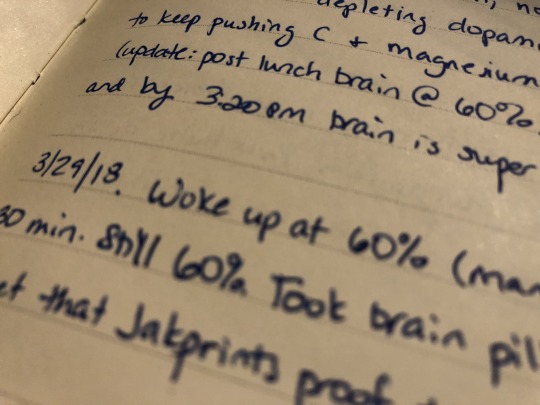
Back in early spring of this year, after I’d gotten the hookworms out of my face but while I was still dealing very intensely with all the physical damage left behind, a very wise woman gave me a piece of advice. She told me to start a journal. In the morning, she said, write down the percentage that I felt I was that day. 20% Maggie. 90% Maggie. Then I should write down what I accomplished that day.
I thought at this point she was going to tell me to admire how much I’d gotten done each day despite being ill. I didn’t want that; I didn’t need a pep talk. I needed my brain.
But that wasn’t what she said. She told me: write down what you’ve managed to do on a 20% day, what you’ve managed to do on a 40% day. Eventually you’ll have a guide so when you wake up and you’re at 20%, you won’t try to do the things you do on a 40% day. You’ll know you can just go watch a movie or sit with your goats or whatever and not feel guilty, because you were never going to write words you could keep or be able to exercise or whatever.
And that was the right way.
It meant I no longer labored for 12 hours each day, doing nothing but trying to smash my way through a draft. Instead I slowly began to write bits and bobs in on my good days. A funny thing happened then: once I was not spending every second forcing myself to do things I couldn’t, I found I had enough energy to actually start to work on myself. To look for patterns in my good and bad days. To research healthcare providers and new studies on what was wrong with me still. Slowly I found I was able to chain more of the 60% days together, then 80% days. Slowly I began to realize that although it was taking months, I was improving overall.
I threw out every labored word I had written on my current book and I began again with ferocious and structured joy. It took me only a few weeks to completely regain the wordcount of that draft I forced, only this book was free and easy and ridiculous and batshit and I loved it.
I still have 20% days. Really, seriously, don’t let hookworms in your face, especially if you already have an underlying condition. I don’t know when I’ll actually be completely better. But I do know that on those 20% days, I don’t have to make things. It’s ok. I can spend those days enjoying whatever I can. Consuming art instead of making it. That’s enough. That’s right.
I’m very proud of Saints, both how it turned out and what it took from me. But I wouldn’t wish that on anyone. There’s a better way.
I thought of happiness, how it is woven Out of the silence in the empty house each day And how it is not sudden and it is not given But is creation itself like the growth of a tree. No one has seen it happen, but inside the bark Another circle is growing in the expanding ring. No one has heard the root go deeper in the dark, But the tree is lifted by this inward work And its plumes shine, and its leaves are glittering.
So happiness is woven out of the peace of hours And strikes its roots deep in the house alone: The old chest in the corner, cool waxed floors, White curtains softly and continually blown As the free air moves quietly about the room; A shelf of books, a table, and the white-washed wall— These are the dear familiar gods of home, And here the work of faith can best be done, The growing tree is green and musical.
For what is happiness but growth in peace, The timeless sense of time when furniture Has stood a life’s span in a single place, And as the air moves, so the old dreams stir The shining leaves of present happiness? No one has heard thought or listened to a mind, But where people have lived in inwardness The air is charged with blessing and does bless; Windows look out on mountains and the walls are kind.
So I was taught a lesson in how to get rid of a migraine in 30 seconds and omfg listen my migraines don’t go away ever but I was shown what part of my body to touch and like???????????????
It’s witchcraft????????? Like I would be burned at the stake if I lived in ye olde days knowing that information?????
What the fuck??????
Spill it! Lol….Hooooowwwww?? Had migraines since age 9….😓😓😓
Its called the T4 push, but I literally can’t find the info online????? I guess I’m not searching good enough? These medical fuckers are holdin out on us lol.
It’s best to have someone do this for you while you stand up and relax your muscles as best you can, but if you’re alone, a tennis ball and a flat surface will probably work. Alternatively you can lie on the edge of a bed at the pressure point. (But no really do try to find someone to do it for you)
Find the area in your spine between either the first, second, third, or fourth vertebrae. It should be sore and uncomfortable to press down on, so look for the one that’s most painful, and press down with as much pressure as you can on that area for 30 seconds.
Realize that 80% of your pain has magically disappeared and keep the info secret if you live in a small puritan town, lest you be tried for witchcraft.
If you don’t have to worry about being burned or hanged, then share the info with your migraine suffering friends.
As someone who wrote a 10k word paper on pressure points for a high belt ranking test in her martial arts class, I can tell you that you just found a pressure point used in acupressure and acupuncture to relieve pain, particularly that in the head. 🙂
Hand to god we discovered this by accident when my husband was rubbing my neck and I nearly collapsed it felt so good
This post was sent by literal angels??? I’ve had a persistent low-level headache for nearly 24hrs and now it’s gone??? In 30 seconds? What gods did you sacrifice to for this information!?!?
As a medical massage therapist, I thought I would give my two cents.
This is good for tension migranes and normal migraines, but actually pretty useless for sinus migraines. It’ll help for a hot second, but quickly come back. (These are usually the migraines behind your eyes, in your ears, and behind your forehead. Sometimes it can feel like jaw pain or TMJ) for sinus migraines, behind the ear in a divot. Press down firmly and pull towards your collarbone. That’ll drain your sinuses. Also, pressing around the eye socket on the cheekbones help. There is also a little triangle up away from the eye in the eyebrow bone. Press and hold pretty hard and that’ll relieve that behind the forehead pain. Also, ear pulling is great to help move sinuses around.
Don’t forget the temples too! Press firmly and hold. Open and close your jaw while holding your temples. It’ll feel weird, but it’ll help with jaw pain. It’ll work a similar way if you hold the jaw joint under your cheekbone.
And never underestimate the power of a foot massage!! Give minutes can be all the difference!! Our feet are our base. If they hurt even a little, somewhere else in your body will hurt. Treat your feet and sinuses kindly!
As a lifelong sufferer from frequent migraines I will reblog this everytime I see it, for myself and my fellow sufferers!!
For TMJ-type pain, put the tip of your tongue against the back of your top front teeth. It won’t go away completely, but it helps.
Diagram (with slider for different layers; it starts with muscles and you have to move the slider down to see bones).
the main piece of advice i have for students is this: learn how to fail and persevere. it is a skill that will help you in life far more than perfect grades.
think of failure impersonally. when you fail, you have just eliminated one method that doesn’t work for you, so you need to try a different method in the future. figure out which factors contributed to the undesirable result, and change them. (teachers, advisors, and academic counselors can help you with this if you aren’t sure where to start).
i know from personal experience that fear of failure is often a self-fulfilling prophecy, because it leads to self-sabotage. if you can learn not to think of it as an inherent personal flaw, but rather as a strategy that didn’t work for you and can be changed, you will be well-equipped to face the inevitable failures and rejections that are part of life.
you have to get yourself out of bad places. you need to resist the temptation to let everything slip and become apathetic & cynical toward yourself and your life. you need to accept that it takes time to change and it’s ok to fall over as long as u get back up. every morning is a new start and things don’t have to be this way forever. you can heal and you can change.
Taken from Adult Children of Emotionally Immature Parents by Lindsay C. Gibson, Psy.D. A summary of the tips the book hands you on how to recognize emotionally healthy people.
They’re realistic and reliable
They work with reality rather than fighting it. They see problems and try to fix them, instead of overreacting with a fixation on how things should be.
They can feel and think at the same time. The ability to think even when upset makes an emotionally mature person someone you can reason with. They don’t lose their ability to see another perspective just because they aren’t getting what they want.
Their consistency makes them reliable. Because they have an integrated sense of self, they usually won’t surprise you with unexpected inconsistencies.
They don’t take everything personally. They can laugh at themselves and their foibles. They’re realistic enough to not feel unloved just because you made a mistake.
They’re respectful and reciprocal
They respect your boundaries. They’re looking for connection and closeness, not intrusion, control or enmeshment. They respect your individuality and that others have the final say on what their motivations are. They may tell you how they feel about what you did, but they don’t pretend to know you better than you know yourself.
They give back. They don’t like taking advantage of people, nor do they like the feeling of being used.
They are flexible and compromise well. Because collaborative, mature people don’t have an agenda to win at all costs, you won’t feel like you’re being taken advantage of. Compromise doesn’t mean mutual sacrifice; it means a mutual balancing of desires. They care about how you feel and don’t want to leave you feeling unsatisfied.
They’re even-tempered. They don’t sulk or pout for long periods of time or make you walk on eggshells. When angered, they will usually tell you what’s wrong and ask you to do things differently. They’re willing to take the initiative to bring conflict to a close.
They are willing to be influenced. They don’t feel threatened when other people see things differently, nor are they afraid of seeming weak if they don’t know something. They may not agree, but they’ll try to understand your point of view.
They’re truthful. They understand why you’re upset if they lie or give you a false impression.
They apologize and make amends. They want to be responsible for their own behavior and are willing to apologize when needed.
They’re responsive
Their empathy makes you feel safe. Along with self-awareness, empathy is the soul of emotional intelligence.
They make you feel seen and understood. Their behavior reflects their desire to really get to know you, rather than looking for you to mirror them. They aren’t afraid of your emotions and don’t tell you that you should be feeling some other way.
They like to comfort and be comforted. They are sympathetic and know how crucial friendly support can be.
They reflect on their actions and try to change. They clearly understand how people affect each other emotionally. They take you seriously if you tell them about a behavior of theirs that makes you uncomfortable. They’ll remain aware of the issue and demonstrate follow-through in their attempts to change.
They can laugh and be playful. Laughter is a form of egalitarian play between people and reflects an ability to relinquish control and follow someone else’s lead.
They’re enjoyable to be around. They aren’t always happy, but for the most part they seem able to generate their own good feelings and enjoy life.
Adult Children of Emotionally Immature Parents, Lindsay C. Gibson, Psy.D
not everyone has all these traits – this is more a list of what to aspire to – but it’s a very good touchpoint for determining if you’re heading in the right direction.
A lot of the advice I got about learning to enforce my boundaries was framed as an adversarial thing. Like, ‘yes, it might upset and disappoint the people around you, but you have to learn to tell them ‘no’ anyway.’ At best, ‘good people will still like you if you enforce your boundaries’.
What I wish I’d been told is that good people will think it’s awesome that you enforce your boundaries, that there are people who will respect the hell out of you for it, that there are people who will admire you not despite you telling them no, but because of it. That most people don’t want to make you do something you don’t enjoy,and so they’ll actively be happier and more relaxed around you if they know they can trust you to decline to do things you don’t enjoy and to ask them to stop things that bother you.
It helped me a lot, personally, to stop thinking of ‘enforcing my boundaries’ as something I did for me and more as something I did to empower the people I was close with, to build a situation where they and I felt sure everything that was going on was something we all wanted.
Most advice isn’t good for everyone and this advice seems maybe bad for people in abusive situations, because sometimes you do need to learn to enforce boundaries against people who will try to violate them. But if there are other brains like me out there: your partner will be really happy you can say no to them. your friend will be really happy you change the subject when you hate it. your roommate will really appreciate that you tell them to turn down the music. most people will feel safer and more comfortable around you if they know you’ll reliably express your needs, AND they’ll feel better about voicing theirs.



 Site Title