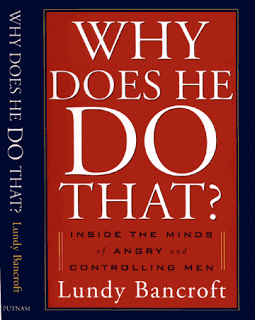
Cannot recommend WDHDT highly enough. I’ve found it helpful not just for romantic relationships, but also for growing up w a “unexplainable/uncontrollable” dad.
IT HAS ALSO BEEN REALLY HELPFUL FOR UNDERSTANDING ONLINE MOB HARASSMENT.
So if you’ve ever been bombarded w threats to be raped/killed, (so…if you’re a minority and you’ve been on the Internet for a while), this book might be useful for getting clarity around the whole entitled, abusive mindset that drives certain kinds of people to behave that way. And by “getting clarity”, I mean (for me) being able to go “oh, that’s what’s happening” and not really feel scared anymore. Or angry, or drawn out into it, or anything.
And if you’re still standing around going “but how does something like GamerGate happen?” or “but why do men hit their wives?” or whatever – please read that book and learn something.
^^^^ truth WDHDT is fantastic at cutting down MRA bullshit and calling it what it really is
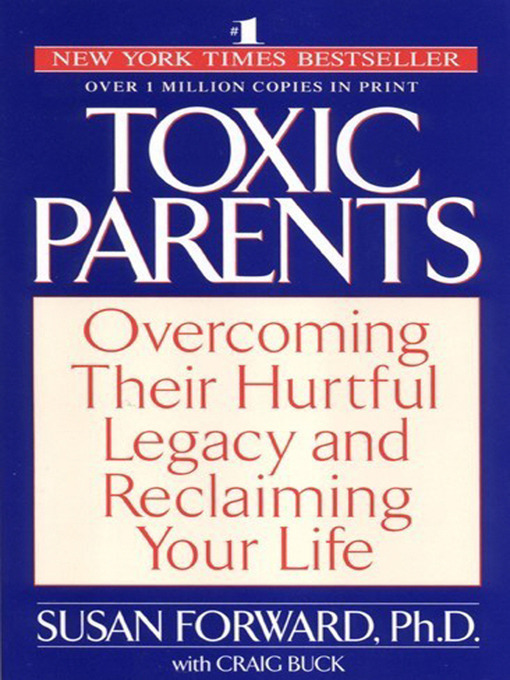
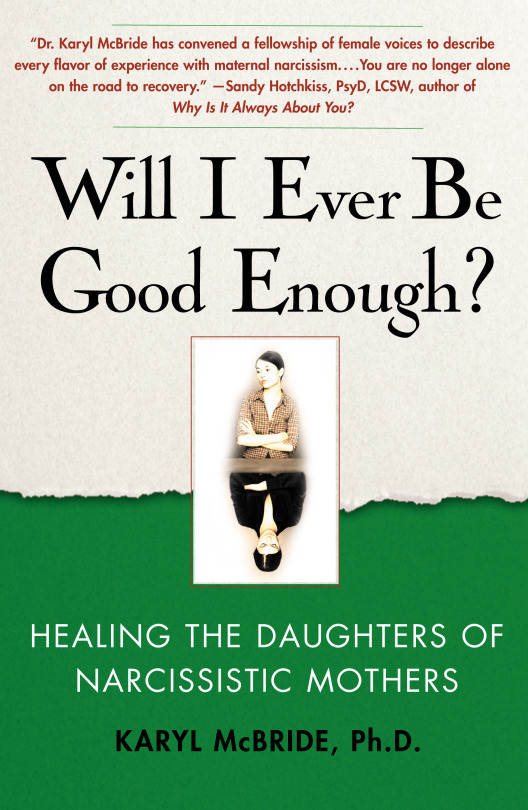
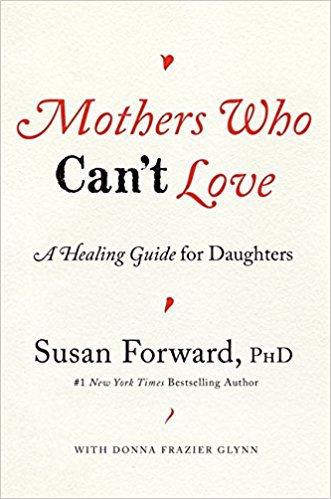
Please consider reading these. WDHDT is really, really helpful. And I know some of you are struggling with abusive relationships, friendships, families, etc. You’re not alone. There is help.
Yo. This family holiday, please, please take care of yourself. You aren’t there to be anybody else’s cushion.
Adult Children of Emotionally Immature Parents: How to Heal from Distant, Rejecting, or Self-Involved Parents
Reading any of these books does not mean you don’t love your parents or family. It’s just self care for helping you cope and not repeat the behaviors.
I WOULD PAY TEN TIMES AS MUCH FOR CHOCOLATE IF IT MEANT REDUCING THE AMOUNT OF SLAVES IN THE WORLD? HOW IS THIS ANY KIND OF PROBLEM.
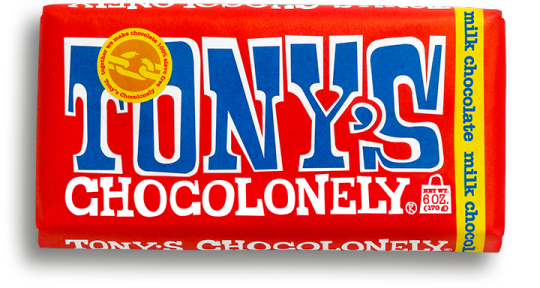
good news, you can! the company’s called Tony’s Chocolonely and their entire purpose is to make slave-free chocolate and reform the chocolate industry.
Whole Foods carries it. If you don’t want to support an Amazon-owned company, World Market carries it. You can also buy it directly from the company.
It’s the best chocolate I’ve ever had and it’s 100% slave free. Tony’s Chocolonely works really hard to push for transparency within the chocolate industry and actually has and is following an action plan to eliminate slavery within cocoa production. They’re good people who make good chocolate.
Gather ‘round kids: I had a coworker mention to me this morning that it’s impossible to get grease stains out of fabric. As a former chemistry minor who worked two years under the table doing housekeeping and who generally tends to be a fucking disaster, I am here to tell everyone that it absolutely is not impossible, in case this is a widespread belief. Here are a few of my favorite cleaning stain removers that I always have at home.
Here are some options:
A Tide™ pen.
I’m a generic kinda lady. I hate promoting brands 99% of the time. BUT if you catch absolutely any kind of stain before it gets ground in, you can get most of it out with one of these babies. I’ve tested it on blood, chocolate, coffee, guacamole, pizza sauce, red wine on, on that one time i accidentally slopped some oil I was supposed to be using on antiques onto a fancy rug (also an antique but not the one I was gunning for). If you’re washing something delicate, pump it onto your finger a couple of times and gently rub it in. I’m not sure what they put in these things but I’m pretty sure it’s an arcane secret.
Dish soap
Granted, this is a little trickier for upholstery/carpet, but it can still be done using a rag, some water, and some patience. But for clothing, just pour some soap on the stain and rub it in under cold running water.
Absolutely any clear alcohol is your new best friend
You know the old “white wine to clean red” trick? Well, this is its updated sister I like to call “you, too, can use coconut rum to get red jello shot out of your nice white dress”. It’s a nice party trick. Straight vodka works even better. For every day situations involving any kind of alcohol-related spills (including markers)–and especially work situations–rubbing alcohol is ideal. To quote another adage, this one from every chemistry teacher you will ever meet, “like dissolves like.”
Hydrogen Peroxide
It can get blood out of absolutely anything, including your mattress. It reacts with the iron in hemoglobin, which breaks down the molecule, causing it to lose its red color. So make sure you’re not using a cast iron skillet to wash your period underwear in.
Vinegar
This will dissolve lime buildup overnight. Fill a bag, tie it around your showerhead, and presto. You can also use it to scrub the area around your sink and to break up any buildup in pipes. (Limeaway™ is for rich people.)
Baking soda
This is great if you have a pet or child who peed on the carpet. Just cover the area, wait until it dries, and vacuum it up. The longer you leave it, the better it will do at removing the smell. It’s also good removing mild odors from a small space, like a fridge or a laundry hamper.
Charcoal
This is your heavy duty odor killer. A little goes a long way. In chemistry, activated charcoal is used as a purifier in reactions, and in medicine, it can be used to treat mild poisoning/overdoses. In your car that smells like someone died because you forgot you had potatoes in the trunk for six months? All you need are regular old charcoal briquettes. Stick a couple handfuls in a flat box and the smell will be gone overnight. Guaranteed. For larger areas, just use more charcoal.
Baking soda is also good for stuff stuck on pots pans and your stove top. Add a little bit of water and elbow grease and it’s like magic
Baby shampoo will get oil stains out of clothing even if it’s been washed and dried several times. Shampoo is formulated to remove oil from organic stuff.
if i knew how to control hyperfocus i’d get a lot more writing done
(almost every time that i have been notably productive, posting a lot of fic, etc, i was in a near-constant state of hyperfocus in ways that were probably detrimental to my overall health whoops)
if you can brute force your way into starting something you’ll probably end up stuck doing it just out of inertia but figuring out the best way to force the issue is hard
I think this sort of thing works differently for everyone, but I’ve slowly been getting better at managing hyperfocus, so here’s some notes on what works for me.
[For these examples, homework is generally the thing I want to be able to hyperfocus on, while art / reading / tumblr are things I find it easy to hyperfocus on. Which things are which varies person to person!]
– I’m aiming for management, not control. I’ve found that trying to force my mental state to be in a certain mode at a certain time is very stressful, exhausting, and if it works at all the state I end up with is a sort of spiteful dissociative emotional-flatline hyperfocus. It’s not good for me in the long term, and while it can be useful for pushing through homework, it’s pretty much incompatible with doing things that involve inspiration and joy, like art.
– So instead, I’m working on identifying different states of focus or functionality that my brain inhabits, and understanding when and why they tend to happen. I’ve found that there’s a variety of factors that make certain states more or less likely, like what physical space I’m in, and how much sleep I’ve had, and whether other people are around. These factors are things I can control, so I try to modify them to coax my brain into a focus state I want, rather than trying to change my mental state directly. Some things to consider are: what kind of background noise do you find soothing? energizing? stressful? overwhelming? Would having a friend nearby help keep you engaged in what you’re doing, or would it distract you? Is there a space in your life that you can designate to only spend time in when you’re focusing, and leave as soon as you get distracted? (This can help cue your brain to focus as soon as you arrive in the space.) Likewise, is there a space you can designate for relaxation? What effect does caffeine have on you specifically? (This one varies a TON for people with ADHD. I’d say it’s at least worth experimenting with, and recommend trying low doses like tea or chocolate for less jarring effects.)
– That being said, it’s at least as important to listen to the state you’re in as to try to change it. I’m finding that some mental states are a sort of early warning or a request for self care, and if I listen to what they want from me, I can avoid getting into the really bad states. For example, sometimes I’ll get out of class on a sunny afternoon feeling pretty good, like I probably have enough energy to do homework – but what I really want to do is sit in the sun and draw. My brain is presenting me with an offer to focus on art, to really get into it – that’s the focus state it wants to be in. I can still chose to ignore it and go do homework, and I’ll probably be able to get some work done, but it’ll take more time and energy to focus than usual, and leave me pretty exhausted. Whereas if I take the offer to sit and draw, I’ll not only get a lot out of my engagement with my art, I’ll also feel satisfied and refreshed. Because I’m not fighting my brain on what it wants. Deadlines and schedules being what they are, I can’t always take that option. But the more often I’m able to indulge my brain in the ways it wants to focus, the better my mental health stays, and the more likely I am to end up in mental states that are ideal for doing homework.
– Identify the ideal mental state for doing a certain task, and the not-ideal-but-good-enough mental states, and the not-even-even-worth-trying mental states. I have a state where I feel full of energy and determination, and I want to do something that challenges me, or something that gives me satisfaction – that’s the ideal state for homework or housecleaning. I have a state where I feel full of energy and inspiration, I want to express myself, to engage with something, to make something – that’s the ideal state for doing art. They might seem pretty similar at first glance, but trying to do homework in the inspired state fucking sucks. It’s pretty possible to do art in the determination state, but usually I grab the opportunity to get homework or cleaning done. I have a state where I feel pretty neutral, focused but not hyperfocused, so I kind of bounce from task to task. As long as I don’t choose any tasks I’m likely to get hyperfocused on, I can juggle getting a couple things done gradually. Maybe bouncing between math problems and loading the dishwasher. I have a state where I feel emotionally ok, but like I just can’t focus on anything, and I need to curl up and indulge in something soothing and distracting. This is very much a warning sort of state. If I try to push myself into focusing and functioning in that state, I’ll be miserable, anxious, and get basically nothing done, as well as kicking my emotional state into something I need to spend time recovering from – further sabotaging my ability to get anything done for the next few days. If I just give up that homework assignment as a lost cause and take care of myself, my mental state will actively improve, and I’ll be more able to focus the next day.
– There are also the Bad States, where I may or may not be able to focus but I feel like shit. The whole point of this management strategy is to avoid those as much as possible. Even if I can focus in “I hate everything including myself and I’m going to fucking fight it” state, it’s not worth it in the long run.
So here’s a rough layout of my strategy for applying these concepts:
– I keep a running list of things to do. It contains things that need doing (housecleaning, homework assignments due soon), things I want to get done (art projects I’m working on, reorganizing my room), and things that will make me feel good to do (seeing friends, mucking around with art in an unfocused way, researching special interests). – When I have some piece of time – say I’ve just gotten out of class for the day – I take stock of my mental state. What kinds of tasks would I be up for doing? Is there something I’m feeling especially drawn to do? – If I’m feeling like I’m in a good state for functioning in a particular way, and there’s something on my list that suits that, great! That’s my plan now. – If I’m feeling like I’m in a kind of mediocre function state, I consider what things I could do to modify it. Would it help to go somewhere with a focused atmosphere and a background level of light and noise that takes up some sensory processing but not too much? Would it help to go somewhere very quiet or isolated with no distracting noise or movement? Would it help to get a meal, or a cup of coffee? Would it help to take some time to relax first and do something from the feel good list, and check back in later? – If possible, I chose a way to try to improve my function state. Or, if nothing seems super promising for helping, I go through my list for a task I could probably get done at my function level, like a small assignment. Sometimes, starting out by focusing on a small assignment helps get my brain in gear to focus on something harder. Also, doing something satisfying (like completing a drawing, or finishing a cleaning task) can sometimes help me feel more functional, and springboard up into a better level of focus. And if not, hey, at least I got that one thing done! – If I’m feeling like shit, I start by troubleshooting. Am I hungry? Dehydrated? Overstimulated? In pain? First thing first, fix that problem. Then choose a feel good task. Best case scenario, I’ll feel better in a bit and loop back to the top of this list and try again. But if not, I’ll take care of myself and try again tomorrow.
Miscellaneous other notes:
– Transitional tasks! Small, well-defined tasks with a clear finishing point can be useful for working up into a focused state. It’s important to chose tasks for this that won’t get you drawn in to doing something that’s not what you’re trying to work up to – which is why you need to make sure there’s a fixed endpoint past which you can’t really keep working. The smaller and faster the task is, the better. What you’re going for is the little rush of confidence and satisfaction that happens when you finish something – so you can use that energy boost to start something bigger. You can chain these together, too, starting super small and working up to bigger things. Or you can take a break from an exhausting project to do a small thing start to finish for that satisfaction boost.
– Stimmmmmm. For a good focus state, you need enough of your brain occupied that you don’t get distracted, but not so much going on that you get overstimulated. Stim toys and body motion stimming are great, but I personally find them hard to balance with working on something steadily? I actually just… forget to stim. So I rely a lot on managing how stimulating my environment is. That includes background noise (both volume and how chaotic it is), visual input (whether there’s a lot of motions, colors, variations in the lighting, etc) and how many people are present (passively keeping track of what people are doing around me is a mental process separate from just how much noise they’re making.) I’m also personally pretty sensitive to the mood of a crowd, so it can be helpful to work near other people who are clearly focused, and hard to work near people being social. Art wise, a group of people who are all doing art can be really energizing and inspiring – but it can also be really overwhelming. Especially because some people do art in a very laid-back way, and some people do art in a very intense way, and these can conflict. I’d say groups of two or three people who do art with a similar energy level are ideal.
– Refocusing. When I’m working along on something and feel myself starting to get frazzled, I get up and get myself a glass of cold water. The goal is to disengage with the task, give my brain a minute to shake itself out, and then sit right back down and re-engage. Physical motion helps, it gets the restless feeling out. Taking a drink of cold water is calming, just enough sensation to momentarily pull in your attention. Also, it helps you stay hydrated!
– Keep yourself fed and watered! It can be really hard to remember to eat in hyperfocus. This is extra unfortunate, because focusing takes a huge amount of energy. Your brain physically needs energy to function, and it gets that energy in the form of sugar. Thinking hard burns through an incredible amount of sugar. If you start to feel wrung out, try getting some quick sugar into yourself – fruit juice, soda, ice cream, a chocolate bar. It’s amazing how much it makes you feel like you can think again. Obviously, also eat actual nutritious meals, your body needs more than sugar to survive! But making sure to keep your brain supplied with sugar can really help with focusing for long periods of time, and not feeling like a monster afterwords. Also drink plenty of water, or you might emerge from hyperfocus with a nasty headache.
That’s about all I’ve got! Sorry this is so dang long, but hopefully something in there is at least a little useful.
Taken from Adult Children of Emotionally Immature Parents by Lindsay C. Gibson, Psy.D. A summary of the tips the book hands you on how to recognize emotionally healthy people.
They’re realistic and reliable
They work with reality rather than fighting it. They see problems and try to fix them, instead of overreacting with a fixation on how things should be.
They can feel and think at the same time. The ability to think even when upset makes an emotionally mature person someone you can reason with. They don’t lose their ability to see another perspective just because they aren’t getting what they want.
Their consistency makes them reliable. Because they have an integrated sense of self, they usually won’t surprise you with unexpected inconsistencies.
They don’t take everything personally. They can laugh at themselves and their foibles. They’re realistic enough to not feel unloved just because you made a mistake.
They’re respectful and reciprocal
They respect your boundaries. They’re looking for connection and closeness, not intrusion, control or enmeshment. They respect your individuality and that others have the final say on what their motivations are. They may tell you how they feel about what you did, but they don’t pretend to know you better than you know yourself.
They give back. They don’t like taking advantage of people, nor do they like the feeling of being used.
They are flexible and compromise well. Because collaborative, mature people don’t have an agenda to win at all costs, you won’t feel like you’re being taken advantage of. Compromise doesn’t mean mutual sacrifice; it means a mutual balancing of desires. They care about how you feel and don’t want to leave you feeling unsatisfied.
They’re even-tempered. They don’t sulk or pout for long periods of time or make you walk on eggshells. When angered, they will usually tell you what’s wrong and ask you to do things differently. They’re willing to take the initiative to bring conflict to a close.
They are willing to be influenced. They don’t feel threatened when other people see things differently, nor are they afraid of seeming weak if they don’t know something. They may not agree, but they’ll try to understand your point of view.
They’re truthful. They understand why you’re upset if they lie or give you a false impression.
They apologize and make amends. They want to be responsible for their own behavior and are willing to apologize when needed.
They’re responsive
Their empathy makes you feel safe. Along with self-awareness, empathy is the soul of emotional intelligence.
They make you feel seen and understood. Their behavior reflects their desire to really get to know you, rather than looking for you to mirror them. They aren’t afraid of your emotions and don’t tell you that you should be feeling some other way.
They like to comfort and be comforted. They are sympathetic and know how crucial friendly support can be.
They reflect on their actions and try to change. They clearly understand how people affect each other emotionally. They take you seriously if you tell them about a behavior of theirs that makes you uncomfortable. They’ll remain aware of the issue and demonstrate follow-through in their attempts to change.
They can laugh and be playful. Laughter is a form of egalitarian play between people and reflects an ability to relinquish control and follow someone else’s lead.
They’re enjoyable to be around. They aren’t always happy, but for the most part they seem able to generate their own good feelings and enjoy life.
Adult Children of Emotionally Immature Parents, Lindsay C. Gibson, Psy.D
not everyone has all these traits – this is more a list of what to aspire to – but it’s a very good touchpoint for determining if you’re heading in the right direction.
The results are in for the first-ever NPR Turning the Tables readers’ poll, and they send a strong message to anyone fancying themselves a cultural justice warrior in 2018. It is this: check your intervention. The original list of 150 Greatest Albums Made By Women, assembled by a committee of nearly 50 NPR-affiliated women, sought to correct a historic bias against putting women’s stories, and their artistry, at the center of popular music history. Your votes and comments, which deeply modify and sometimes openly challenge that list, challenged us to recognize that no matter how justified the correction may be, in popular music — happily — no center ever holds.
Instead, music’s center shimmies and bops. Playing the game of lists and charts, we might serve music better with an animated version of the classic Venn diagram, in which circles overlap, obscure each other, and stay in motion. The queens of one era are the forgotten ancestors of another. Time can also amplify importance: Artists who found their places within loyal subcultures may eventually emerge as central figures in a generation’s story, their legacies tended by fans until they grow sturdier and more vibrant. That’s the one ruling principle in popular music — fans matter. You make history.